
This is because to support the higher sales, the business needs to hire people, and that added cost reduces margins. To calculate the net profit margin, you simply divide net profit by revenue and then multiply the result by 100 to generate a percentage. A higher number usually indicates that the company is effectively managing costs, though it’s important to keep the larger context in mind.
What Is the Difference Between Gross Profit and Net Profit?
Automakers’ profits and sales are limited by intense competition, uncertain consumer demand, and high operational expenses involved in developing dealership networks and logistics. Operation-intensive businesses like transportation that may have to deal with fluctuating fuel prices, drivers’ perks and retention, and vehicle maintenance usually have lower profit margins. In this case, the total revenues of any large or small business may also be expressed as gross income or total income. It is one of the two primary components of a net income component percentage. So, you need to know how to find that total amount of money left over first.
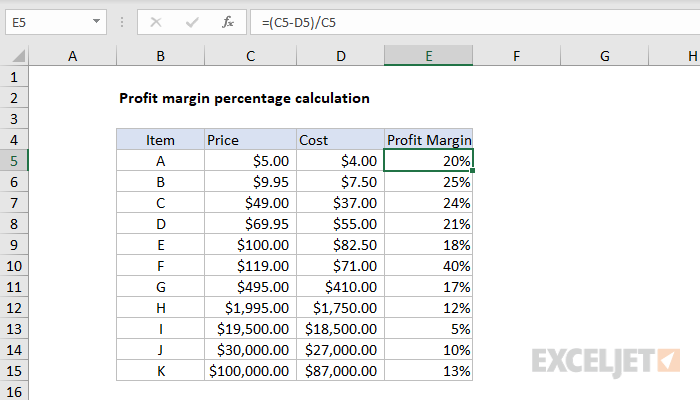
Example net profit margin calculation
No wonder this indicator is closely followed by investors who try to adjust their portfolios and maximize returns. Both gross profit margin and net profit margin are profitability ratios, but because they account for different items, they reveal different insights about a business. The definition of a good net profit margin depends on several factors, including industry standards, business models, and the company’s specific circumstances. Generally, a good net profit margin is one that is higher than the industry average or the company’s historical performance. It signifies a healthy level of profitability and efficient management of expenses. Let’s say you’re in an ABC company with an extraordinary gain from one side business; a soft drink manufacturer’s core business is manufacturing and selling beverages.
Importance of net profit margin
The use of net profit margin negates the effect of size for better analysis of an entity’s performance. This is basically all the money your business earned from sales and other sources. ” However, offering discounts results in major benefits, like increased sales and customer loyalty. We’ll also share examples that’ll transform you into a sales metrics superstar. A company can have a high net profit margin relative to peers while also suffering low or diminishing cash flows.
- It signifies a healthy level of profitability and efficient management of expenses.
- The net profit margin formula may approximate the efficiency of this process.
- For example, if a company’s net income component percentage is 50 percent, it means that 50 percent of its total sales goes toward the company’s profits.
- A 20% net profit margin is generally considered good, but its significance may vary across industries.
- Net profit margin is a key financial metric that provides insights into a company’s profitability.
- A company’s net income is its gross profit minus its cost of goods sold, or COGS.
Keep in mind, however, that typical values of this indicator depend on the type of business you’re in, as well as the overall shape of the economy. If your company faces fierce competition, your net profit margin will probably be lower compared to a situation when you’re a sole supplier to the market. Consequently, the desirable values of this indicator are accounting for day care business entirely relative. It’s also a good idea to compare profitability measures to liquidity indicators, such as the current ratio, to get a broader picture of a company’s financial stance. To learn more about the current ratio, visit our current ratio calculator. The net profit margin is one of the basic profitability ratios you can find in financial analytics.
Companies that can extend their net margins over time are normally rewarded with share price growth, which is typically correlated with high earnings growth. So, the net profit margin is one of the most crucial indicators of a company’s financial health. Due to the fact that your companies express net profit margin as a percentage more than a dollar amount, so it is feasible to weigh up the profitability of the two or more businesses in any case of size.
Net profit margin is a vital financial metric that measures the profitability of a company by quantifying the net income as a percentage of total revenue. According to Investor.gov, net income refers to your company’s profits after all its taxes and other expenses, including production costs, have been deducted from its revenue. If you look at an income statement template, you can find it at the bottom as the value in the bottom line. Net profit margin is a key financial metric that provides insights into a company’s profitability. It measures the percentage of net income relative to total revenue, indicating the portion of revenue that remains as profit after accounting for all expenses and taxes. This article will delve into the concept of net profit margin, covering its calculation, determining what qualifies as a good net profit margin, and interpreting this metric.
Profitability ratios are often the first thing investors look at before investing in a company and the most popular and widely watched of them all are profit margins. The gross profit margin shows the amount of money remaining from revenue after accounting for the cost of goods sold (COGS), which are the expenses and materials used to generate products. When performing a component percentage analysis, analysts are able to determine the distribution of sales revenue dollars. A net income component percentage analysis shows the percentage of sales dollars that goes toward net income or profits. To calculate your company’s net income component percentage, you must first divide net income by total sales. Once this calculation has been completed, you can multiply the resulting figure by 100 to convert it into a percentage.
It is especially useful when tracked on a trend line, to see if there are any spikes or dips in the long-run average net income margin. An outside analyst can use this information as part of an analysis to decide whether to recommend to investors whether a company’s shares should be bought or sold. Sales revenue has earned its position at the top line of all income statements.
Basically, net profit margin, which people also called as net margin, shows how much net income a company makes with the total sales reached. The most common and widely used type of profit margin is net profit margin, which accounts for all of a company’s costs, both direct and indirect. When comparing similar companies, be wary of unusually high profit margins. A closer investigation of the financials may reveal that the current margin was inflated by a one-off event and isn’t sustainable. The number has become an integral part of equity valuations in the primary market for initial public offerings (IPOs).